
Improving the Mobility of People with Disabilities!
Recovering after a leg amputation can feel overwhelming, but the right medical care, rehabilitation, stump care, and prosthetic fitting plan can help you regain confidence, mobility, and independence — step by step.
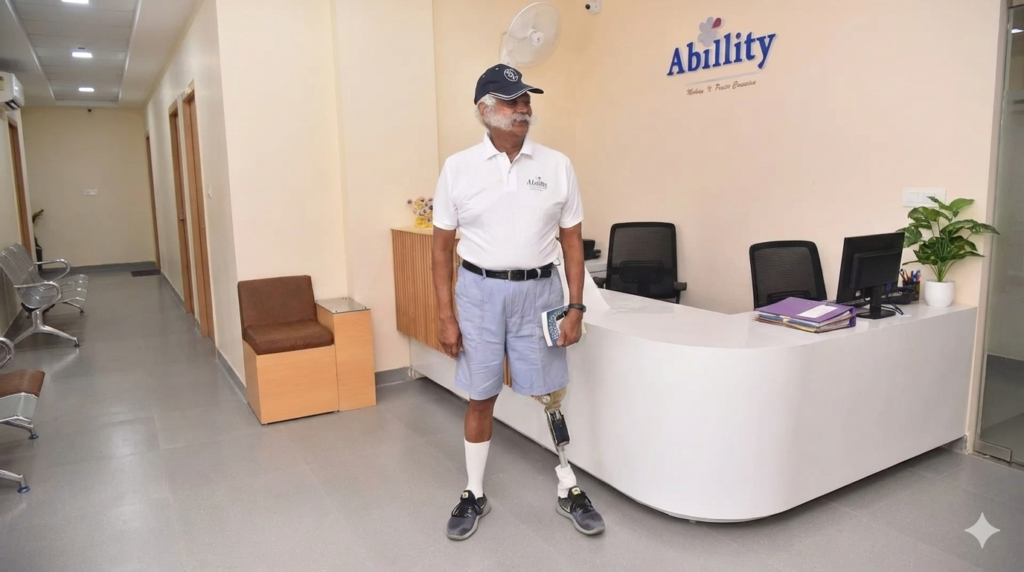
The period immediately following leg amputation involves several important phases — from wound healing and pain management to emotional adjustment and preparing for prosthetic fitting. Understanding each step helps patients and families feel more prepared.
After a leg amputation, the first priority is wound healing and pain control. The surgical site needs time to heal before any prosthetic fitting can begin. During this period, the medical and rehabilitation team helps manage:
Your surgeon, prosthetist, physiotherapist, and rehabilitation team will work together to guide you through each stage of recovery. No two journeys are the same.
Post-surgical care focuses on healing the wound, managing pain, monitoring for infection, and supporting the body's recovery.
The residual limb is managed with compression bandaging or shrinker socks to reduce swelling and begin shaping for prosthetic fitting.
Strength, balance, transfers, and early movement exercises begin as the wound heals and the patient gains stability.
A clinical assessment determines readiness for a temporary prosthesis, which helps with early walking practice and stump shaping.
Measurement, socket design, trial fitting, alignment, and gait training are completed for the prosthetic leg.
Walking training, lifestyle adjustment, and regular follow-up appointments to monitor socket fit and prosthetic function.
The type of prosthetic leg and rehabilitation plan depends on the level of amputation, remaining limb strength, skin condition, lifestyle, and medical history.
A partial foot amputation involves removing part of the foot, including individual toes, rays, or sections of the foot. The goal is to preserve as much of the foot's function as possible. Patients may require custom orthopaedic footwear, pressure-relief insoles, or a partial foot prosthesis to restore walking balance and reduce strain on the remaining foot.
A transfemoral or above knee amputation removes the limb above the knee joint, meaning the prosthetic solution must include a prosthetic knee joint, socket, pylon, and prosthetic foot. Rehabilitation and gait training are more complex and require sustained effort from the patient, physiotherapist, and prosthetist.
A below knee or transtibial amputation removes the lower leg while preserving the knee joint. Because the knee is intact, patients often have better rehabilitation outcomes and walking potential with appropriate prosthetic fitting, socket design, and gait training. Transtibial amputation is one of the most common levels for diabetes-related and vascular amputations.
Knee disarticulation (removal at the knee joint), hip disarticulation (at the hip), and hemipelvectomy represent higher-level, more complex cases. These require specialised prosthetic systems and extended rehabilitation programmes. If you or a family member has had a higher-level amputation, our team can assess your individual situation and guide you through available options.
| Amputation Level | Common Name | Prosthetic Need | Rehabilitation Focus |
|---|---|---|---|
| Partial Foot | Foot-level | Custom foot support, partial foot prosthesis | Balance, pressure relief, custom footwear |
| Transtibial | Below Knee | Socket + prosthetic foot | Walking, stump control, balance training |
| Transfemoral | Above Knee | Socket + prosthetic knee joint + foot | Balance, knee control, gait training |
| Knee Disarticulation | At Knee | Specialised knee disarticulation socket + knee | Weight-bearing through stump, gait adaptation |
| Hip Disarticulation | Hip-level | Hip disarticulation prosthesis system | Advanced rehabilitation, energy management |
Proper stump care in the weeks and months after amputation directly affects wound healing, comfort, and your readiness for prosthetic fitting. This section covers the most important things patients and families need to know.
A partial foot amputation involves removing part of the foot, including individual toes, rays, or sections of the foot. The goal is to preserve as much of the foot's function as possible. Patients may require custom orthopaedic footwear, pressure-relief insoles, or a partial foot prosthesis to restore walking balance and reduce strain on the remaining foot.
A transfemoral or above knee amputation removes the limb above the knee joint, meaning the prosthetic solution must include a prosthetic knee joint, socket, pylon, and prosthetic foot. Rehabilitation and gait training are more complex and require sustained effort from the patient, physiotherapist, and prosthetist.
A below knee or transtibial amputation removes the lower leg while preserving the knee joint. Because the knee is intact, patients often have better rehabilitation outcomes and walking potential with appropriate prosthetic fitting, socket design, and gait training. Transtibial amputation is one of the most common levels for diabetes-related and vascular amputations.
Knee disarticulation (removal at the knee joint), hip disarticulation (at the hip), and hemipelvectomy represent higher-level, more complex cases. These require specialised prosthetic systems and extended rehabilitation programmes. If you or a family member has had a higher-level amputation, our team can assess your individual situation and guide you through available options.
Many patients experience sensations — and sometimes pain — from a limb that is no longer there. Understanding the difference between phantom sensation and phantom pain is an important step toward appropriate management.
Phantom limb pain refers to painful sensations perceived in the part of the limb that has been amputated. It is a real medical condition and not psychological in origin. Some patients describe it as burning, shooting, stabbing, or cramping pain that appears to come from the missing limb. It can range from mild and occasional to severe and frequent.
The exact causes of phantom limb pain are not fully understood, but research suggests it may involve nerve signals, brain reorganisation, spinal cord changes, and pain memory. The brain continues to send signals to areas where the limb used to be, and the absence of returning signals can create confused pain responses. Emotional stress, poor sleep, and infection can also make phantom pain worse.
Phantom sensation and phantom pain are different experiences. Phantom sensation is the feeling that the missing limb is still present — patients may sense its position, temperature, pressure, or even movement. This is common and does not always cause distress. Phantom pain, by contrast, is painful and can interfere with sleep, rehabilitation, and daily life. Both should be discussed with your clinical team.
Often described as heat or electric-like sensations in the missing limb.
A sensation of muscle tension or constriction in the absent limb.
A pins-and-needles sensation that appears to come from the missing area.
Rehabilitation is the bridge between surgery and walking with a prosthesis. A structured, consistent rehabilitation programme is one of the most important factors in your recovery outcome.
Physiotherapy begins as soon as it is safe to do so after amputation surgery. Your physiotherapist works with you on strengthening the remaining muscles, improving balance and posture, managing pain, and preparing the body for safe movement. Good physiotherapy is essential whether or not a prosthetic leg is planned.
Exercises prescribed by a physiotherapist are tailored to your amputation level, wound healing stage, age, and overall health. They typically focus on hip strength (for below-knee amputees), hip and core strength (for above-knee amputees), balance, and residual limb conditioning. Exercise should only be performed as advised by a qualified physiotherapist.
Mobility training follows a gradual progression: bed mobility → sitting balance → safe transfers → standing with support → standing balance → stepping → walking. Each stage is achieved at the patient's own pace, based on healing, strength, and confidence. A walker, parallel bars, or physiotherapy assistance may support early mobility training.
Gait training teaches patients how to walk safely and efficiently with a prosthetic leg. It addresses step symmetry, weight distribution, balance, turning, navigating stairs, and walking on uneven ground. Gait training is a collaborative process between the physiotherapist and prosthetist and continues over weeks to months.
Recovery time after leg amputation varies significantly. Factors that affect recovery include: amputation level, age, diabetes control, vascular health, wound healing speed, mental health, family support, and how consistently rehabilitation is attended. Some patients may begin prosthetic training within weeks; others may require longer healing periods. Discuss your individual recovery timeline with your clinical team.
Safe positioning, bed exercises, circulation care, and preventing joint contractures in the early post-surgical phase.
Hip, core, and upper body strengthening, balance training on a stable surface, and transfer training with physiotherapy support.
Assessment for prosthetic readiness, temporary prosthesis fitting, socket adjustment, and initial standing and stepping practice.
Walking on flat surfaces, stairs, ramps, and uneven ground. Practicing daily tasks, outdoor walking, and building confidence and stamina.
Use this checklist to track your recovery milestones from surgery through prosthetic fitting and beyond. Share it with your family, physiotherapist, or care team.
This checklist is a general educational guide only. Always follow the specific care instructions provided by your surgeon, prosthetist, and physiotherapist.
Prosthetic leg fitting timing depends on several factors: wound healing must be complete, stump swelling must have reduced and stabilised, there must be no active infection, and the clinical team must assess the patient's strength, skin integrity, and overall health. There is no fixed timeline — your prosthetist and surgeon will assess your individual readiness.
A temporary or interim prosthesis is often used during early recovery. It provides an opportunity for early walking practice, helps with socket adjustment as the stump continues to change shape, supports the patient psychologically, and allows the clinical team to assess gait and alignment needs before the final prosthesis is made.
An interim prosthesis is used during the phase when the residual limb shape is still changing. It may be adjusted multiple times. The final prosthesis is designed and fitted once the residual limb shape has stabilised — usually several months after amputation. The final prosthesis is made with greater precision, uses higher-quality components, and is aligned specifically for the individual's gait pattern and lifestyle.
Prosthetic leg fitting is a multi-step clinical process. Understanding what to expect helps patients and families feel more prepared and confident through each stage.
Diabetes is one of the leading causes of lower limb amputation in India. Understanding the reasons, risks, and recovery process can help patients and families make informed decisions and reduce the risk of further complications.
Diabetes affects blood flow and nerve function over time. Poor circulation means that wounds on the foot or leg heal very slowly or may not heal at all. Neuropathy (nerve damage) can cause the patient not to feel injuries or pressure sores until they have become serious wounds. When infection spreads or tissue becomes non-viable, amputation may be necessary to preserve the patient's health and prevent the spread of infection.
Recovery from a diabetes-related amputation requires careful attention to blood sugar control, as high glucose levels slow wound healing and increase infection risk. The clinical team will monitor the wound closely, support stump care, and advise on diet, medication, and activity levels. Prosthetic fitting, when appropriate, will be planned once healing is stable and the medical team confirms readiness.
Protecting the remaining foot is critical for diabetic amputees. The remaining foot carries more load after amputation and is at higher risk of developing ulcers or pressure sores. Regular skin checks, diabetic-specific footwear, custom pressure-relief insoles, and routine follow-up with the medical team are all important aspects of ongoing care. Never ignore sores, blisters, or changes in skin colour on the remaining foot.
Diabetic patients should seek prompt medical attention if they notice any of the following — on the residual limb or the remaining foot:
Life after leg amputation is a journey of adjustment — physical, emotional, and social. With the right support, rehabilitation, and prosthetic care, many amputees go on to live full, active, and independent lives.
It is natural to experience grief, frustration, anxiety, or sadness after limb loss. These feelings are valid and part of the adjustment process. Psychological support, peer connections, and family involvement play an important role in emotional recovery.
Families and caregivers are an important part of the recovery team. They can support daily stump care, physiotherapy attendance, emotional encouragement, and practical daily tasks. The rehabilitation team can guide families on how to help safely and effectively.
With a well-fitted prosthesis and consistent rehabilitation, many amputees return to household tasks, work, and social activities. The timeline varies based on amputation level, health, and individual effort. Gradual, goal-oriented progress is the approach taken by the rehabilitation team.
Confidence grows gradually through prosthetic training, gait practice, and achieving small daily goals. Many patients report that learning to walk with a prosthesis — even basic steps — brings significant emotional relief and renewed motivation.
Many amputees return to work and resume travel with appropriate prosthetic solutions, adaptive tools, and workplace support. Your rehabilitation team and prosthetist can help advise on what is realistic for your specific situation and goals.
A prosthetic leg requires ongoing maintenance, periodic socket adjustments, and long-term follow-up. Regular clinic visits help catch issues early and ensure that the prosthesis continues to fit comfortably and function effectively as the residual limb changes over time.
Life expectancy after leg amputation varies from person to person. It depends much more on the underlying health conditions that led to amputation than on the amputation itself. Common conditions that affect long-term health after amputation include:
Patients should discuss their personal prognosis, risk factors, and long-term health management with their treating doctor — not solely with a prosthetic provider.
The information on this page about life expectancy after leg amputation is for educational purposes only. It does not represent medical advice, clinical prediction, or guaranteed outcomes. Every patient's situation is unique. Please speak with your treating doctor for a complete understanding of your personal prognosis and health management plan.
Based in Gomti Nagar Extension, Lucknow — we provide a complete path from post-amputation assessment to prosthetic fitting and long-term follow-up.
Individually designed prosthetic sockets for maximum comfort, fit, and function — no two sockets are the same.
In-house prosthetic fabrication and fitting services for faster turnaround and better alignment control.
A clinical team with 15+ years of experience in lower limb prosthetics, orthotics, and rehabilitation support.
Integrated rehabilitation guidance and gait training support as part of the prosthetic fitting journey.
Socket adjustments, prosthetic maintenance, and ongoing clinical support throughout your prosthetic journey.
Honest, patient-centred guidance on prosthetic options, realistic expectations, and what each stage involves.
Explore our full range of prosthetic, orthotic, and foot care services to find the right support for your needs.
Custom prosthetic leg solutions for transtibial and transfemoral amputees, including socket design and gait training.
Prosthetic foot solutions for partial foot amputation and distal lower limb needs, including energy-return options.
Diabetic footwear, pressure relief, wound prevention, and specialist support for the remaining foot after amputation.
Custom orthopaedic insoles for pressure redistribution, diabetic foot protection, and biomechanical support.
Custom knee orthosis and KAFO solutions for patients with knee weakness, instability, or post-surgical support needs.
Activity-specific and sports prosthetic solutions for patients who wish to return to physical activity and sport.
Every patient’s journey is unique. These are stories of recovery, resilience, and renewed independence from patients who have walked the same path.
Hi I am surendra yadav
It was an awesome experience with ability health care.The crew members and Dr Kuldeep , Dr Anushree so nice and humble .
Really I m very happy with our personal experience with ability health care .

I have had a very good overall experience with Ablity health care and Dr. Anushree. I have been using the arch support for about an year now and it has helped me with the heel pain I was suffering from.

Anamika Gupta
Had a very good experience in ability health care.Got my above knee Prosthetic leg & I’m very comfortable & happy with the fitment.Thanks to Dr. Kuldeep & Dr. Annushree.

SHOURABH KUMAR
Hi this is Rishi it was good experience with Ability health care.As for as Dr.Kuldeep is concerned he is a to good, responsible & experienced person. & Dr.Anushree is also caring and humble.
Really it was great experience.

Mahendra Kumar
My self utkarsh we had a best experience in ability health care bundle of thanks to all the staff and specially Dr. anushree mam she helped us and now my brother can walk easily thank you again 😊👍🏻

Som Awasthi
In Ability Healthcare, artificial hands with very good sensor are fitted. Many thanks to Dr. Kuldeep Singh and Dr. Anushree Singh. Now we are able to do all our work again.
Do visit Ability Healthcare Lucknow for artificial hands fitting.

Sanjay Kumar
We have answered the most common questions from patients and families about leg amputation recovery, stump care, prosthetic fitting, and long-term mobility.
Whether you are recovering from a recent amputation or planning prosthetic leg fitting, Ability Healthcare can guide you through residual limb care, prosthetic assessment, fitting, gait training, and long-term mobility support.